Lighting design plays a vital role in supporting efficient wayfinding – people’s ability to navigate their environments. Field studies have demonstrated that proper lighting design can significantly improve people’s ability to navigate and orient themselves in a given environment. With increasing age, elderly people experience visual and cognitive impairments, and wayfinding is a significant challenge involving both cognitive and visual performance. For cognitively impaired people, disorientation in healthcare facilities is a prevalent issue – and an area that lacks research on the influences of lighting on wayfinding. Disorientation in healthcare facilities can lead to wandering, increased anxiety, a decreased sense of well-being, and increased caregiver burden. While exact statistics vary, disorientation incidents are frequent among cognitive impaired patients. Addressing these challenges through research and physical design improvements is crucial for enhancing the well-being of this understudied population. Strategically illuminating the environment with the right quality and quantity of lighting, and placing a stronger focus on visual cues, can facilitate individuals in making well-informed decisions regarding their routes. The gap in research that we aim to address is the limited understanding of how human-centric lighting parameters impact the wayfinding abilities of older adults with mild cognitive impairments in healthcare settings, which is essential for designing effective therapeutic environments.
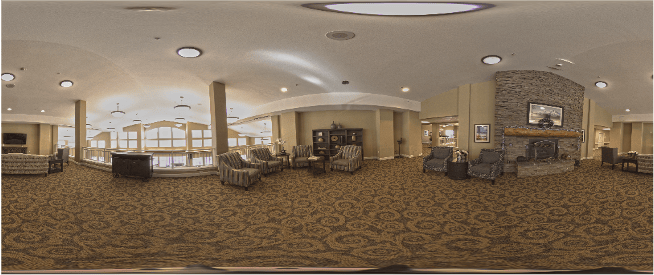
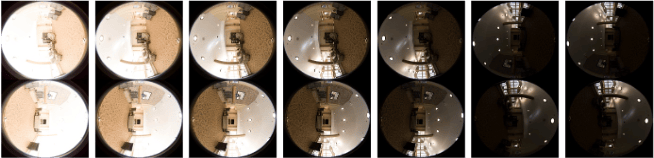
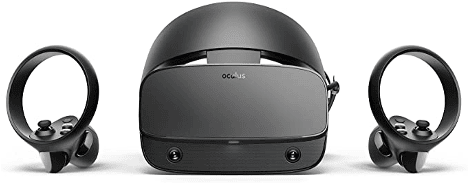
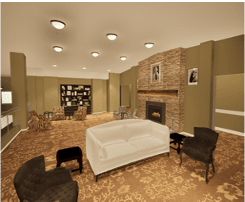
In Particular, this study aims to explore how human-centric lighting parameters including light level, correlated color temperature (CCT), and spatial pattern of light (uniformity vs non-uniformity) affect the cognitive performance and wayfinding of older adults with mild cognitive impairments in both real physical environments and immersive virtual environments (IVEs). IVEs create immersive experiences by placing users in 3D lighting models. This first-person perspective fosters a strong sense of presence in virtual spaces and allows for precise control over lighting variables when testing various design scenarios.
Results from the proposed study will provide insight into two important questions: 1) To what extent do different light modes (bright/dim (light intensity), warm/cold (CCT), and Uniform/nonuniform (spatial pattern) impact older adult’s cognitive performance and wayfinding behavior? 2) How does wayfinding behavior and cognitive performance vary between individuals with cognitive impairments and those without cognitive impairments in different lighting conditions? The findings of this research project will critically inform the non-pharmacological strategies and interventions for wayfinding in cognitively impaired older adults, including recommendations for creating therapeutic environments in healthcare facilities.