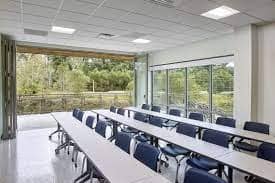
This study addresses the crucial impact of classroom environments on student well-being and academic performance, with a specific focus on the role of visual access to nature and daylighting. While previous research recognizes the significance of factors like lighting, noise, and indoor air quality, there is a noticeable gap in objectively measuring the influence of physical attributes of windows, such as size and positioning, and access to daylighting on students’ cognitive performance and mental fatigue. Existing studies underscore the positive effects of nature exposure on physiological and psychological well-being, but there is a need for a comprehensive investigation into how different types of visual access to nature impact students.
This study aims to explore the effects of views to garden and natural environments in classrooms, as well as proximity to outdoor green spaces, on the cognitive performance and mental fatigue of CSUN students. Through the data collection in both real and simulated classroom conditions the research will assess students’ mental fatigue and cognitive performance. The outcomes will offer valuable design recommendations for fostering healthy classroom environments that enhance students’ well-being, and potentially mitigating anxiety and depression-like behaviors, thereby contributing to improved academic performance.
Upon obtaining IRB approval, this study will employ a purposive sampling strategy to recruit 24 CSUN students meeting specific inclusion criteria voluntarily. First, initial data will be collected from real existing conditions of 4 selected classrooms that have different daylighting and views to nature conditions on CSUN campus. Next, participants will be randomly assigned to experience different classroom conditions through Immersive virtual environments, facilitated by the Primax Crystal Virtual Reality headset. To simulate various combinations of no/direct/indirect views of nature and daylighting, nine conditions will be created using Epic Games’ Unreal Engine and Autodesk 3ds Max. This study utilizes virtual environments because they enable users to experience diverse design scenarios, effectively simulating classroom environments. Virtual environments, with their capacity to isolate users, manipulate lighting variables, and offer a first-person perspective, prove highly suitable for researching and testing various classroom design cases. The experiment sessions, conducted in Sequoia Hall Room 201, will involve participants wearing the VR headset and engaging in two cognitive tasks, including the Trail Making Test (TMT) and Visual Attention Task (VAT), each lasting around45 minutes. Post-task, participants will complete a mental fatigue survey, capturing their subjective experiences. Behavioral measures, such as task completion time, hesitations, and errors, will be recorded, and statistical analysis will be utilized to compare outcomes across the nine conditions.
The results of this study will provide answers related to one extremely critical aspect of classroom design in educational facilities as it directly impacts students cognitive and academic performance and mental health. The findings of this investigation would be beneficial for architects, interior designers, educational facilities administrative, and practitioners to address the identify the essential needs of providing views to nature and access to daylighting in classrooms. These would help create supportive environments for students and improve their cognitive abilities and academic performance as well as enhance students’ mental health and ameliorate anxiety and depression-like behavior.