This study focuses on eye-fixations during wayfinding in unfamiliar environments. Literature shows that disorientation due to wayfinding errors and navigation problems in unfamiliar environments produce frustration, irritation, anxiety, and stress .Spatial disorientation due to weak wayfinding is a major source of stress, when the design of the built environment fails to provide adequate wayfinding cues.
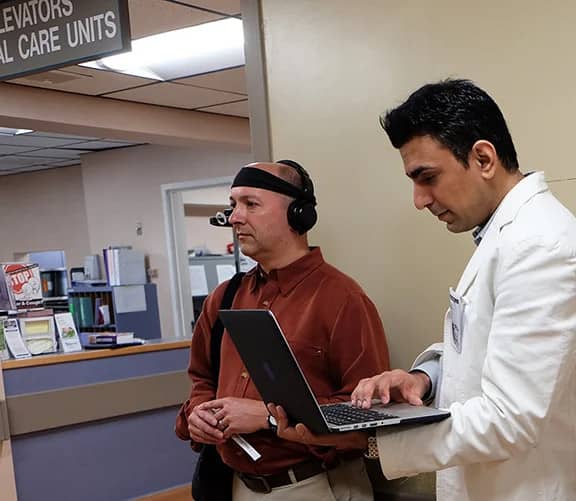
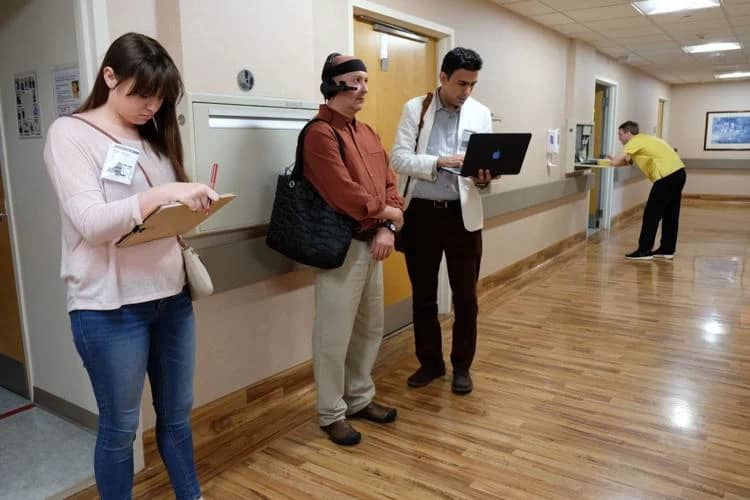
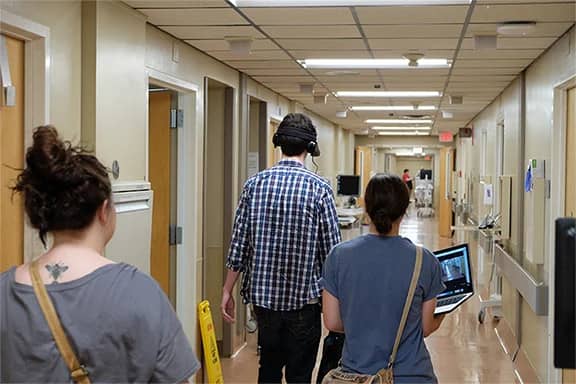
The main question investigates what people look at while navigating in unfamiliar environments. This study identified elements of the designed environment that attract eye fixation during wayfinding, by objectively tracking eye movements and fixation as healthy subjects navigate through a complex unfamiliar setting. EyeGuide® – Mobile Tracking Technology was used to capture data on gaze-fixation. The research setting of this study was the College of Human Sciences. Eighteen adult subjects in different age groups (young, middle age, and elderly) and different genders were asked to navigate five different routes. Data analyses were conducted by using different descriptive and inferential statistical tools such as T-test, ANOVA, and Friedman test.
The results of this study suggested that signs have significant influence on successful wayfinding. In total, signs are the major environmental information source among all classes of environmental cues, covering 47% of the times when subjects looked at them to seek information.. The more the destination was indicated by environmental attributes/elements, the easier the subjects could find their destinations. This study conducted analysis of data on age and gender differences. The results showed that there is a significant difference between males and females on the time of navigation. Males were faster than females during navigations. The results also showed that young age group (20-29) had the fastest navigation tasks among the age groups.